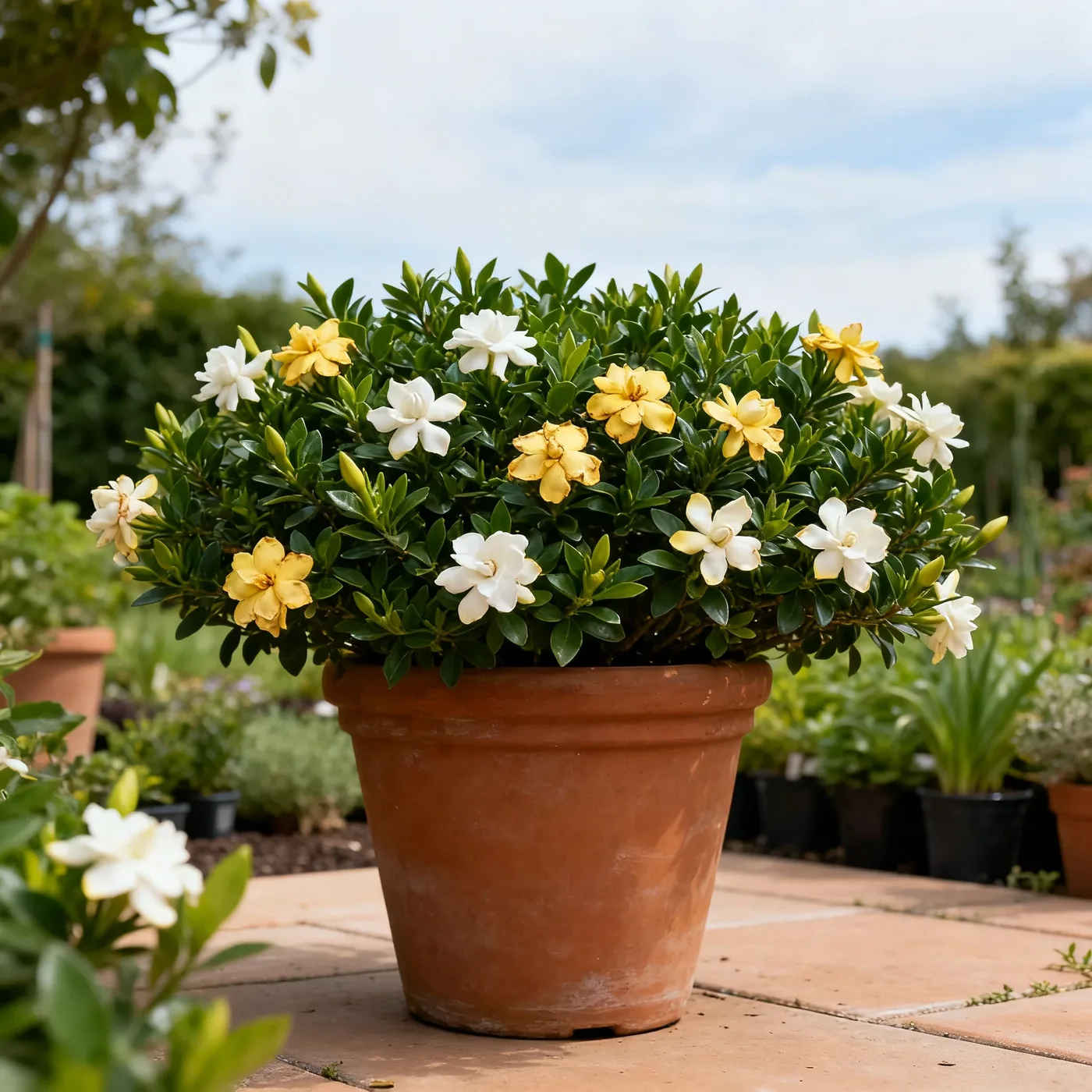
Dwarf Gardenia Radicans
Gardenia jasminoides 'Radicans'
Dwarf Gardenia Radicans, Spreading Evergreen Groundcover
This size is not in the online store yet. Ask about availability and we will reply with current stock.
- Fragrant white blooms throughout late spring and summer
- Evergreen groundcover stays lush and attractive year-round
- Slow-growing form spreads 3-4 feet over time, perfect for borders and small landscapes
About this plant
Dwarf Gardenia Radicans is an evergreen spreading groundcover shrub prized for fragrant white blooms that age to creamy yellow. Its low, spreading form excels in foundation plantings, borders, edging, rock gardens, and containers. This slow-growing cultivar reaches only 1-2 feet tall while spreading 3-4 feet wide, creating a soft, layered landscape effect while remaining compact enough for even small spaces and patios.
Your Dwarf Gardenia arrives in a nursery container, ready to plant. Upon arrival, unpack and water thoroughly to settle the soil. Choose a location with part sun to part shade, ideally morning sun with afternoon shade. Plant immediately or within a few days, keeping the soil consistently moist throughout your first growing season. Acidic, well-drained soil and regular watering ensure strong establishment and blooming.
Dwarf Gardenia Radicans at a glance
| Botanical name | Gardenia jasminoides 'Radicans' |
|---|---|
| Plant type | evergreen shrub (low, spreading groundcover form) |
| USDA zones | 8-11 (some nurseries list 7b-11 with winter mulch/protection at the cold edge) |
| Mature height | 1-2 ft |
| Mature width | 3-4 ft, spreading |
| Sun | part sun to part shade; morning sun with afternoon shade is ideal in hot climates, tolerates fuller sun in coastal/cooler regions |
| Water | medium, consistent moisture; keep evenly moist, especially while establishing |
| Bloom time | late spring through summer (May-July), with sporadic rebloom possible |
| Bloom color | white, aging to creamy yellow |
| Growth rate | slow, roughly 3-6 inches of spread per year |
| Deer resistance | good - generally deer resistant |
| Best planting time | spring or early fall |
Container sizes explained
| #1 / 1 Gallon | A trade one gallon pot (about 6.5 inches). One to two seasons older than a quart, with an established root system. |
|---|---|
| #2 / 2 Gallon | A trade two gallon pot. Common for peonies and perennials that need root room; usually blooms the first or second year. |
| #3 / 3 Gallon | A trade three gallon pot (about 10 inches). A well-developed shrub or small tree, often 2 to 4 feet tall on arrival. |
Questions before you buy
Which size should I choose?
The 1 Gallon is ideal for testing gardenias in your space or filling smaller areas quickly. The 3 Gallon offers more mature foliage and blooms faster, making it the better choice if you want immediate landscape impact or are planting a larger bed.
When should I plant after arrival?
Plant immediately or within a few days of arrival for best results. Unpack and water thoroughly upon receipt to settle the soil and reduce transplant shock. Avoid planting during extreme heat or cold.
How large does Dwarf Gardenia Radicans get?
This cultivar reaches 1-2 feet in height while spreading 3-4 feet wide, making it an excellent low groundcover. Growth is slow, roughly 3-6 inches of spread per year, so it reaches full mature width in about 3-5 years.
What sun conditions does it prefer?
Dwarf Gardenia thrives in part sun to part shade, with morning sun and afternoon shade being ideal in hot climates. In cooler or coastal regions, it tolerates fuller sun. Avoid deep shade, which reduces flowering.
What USDA hardiness zones does it grow in?
This cultivar is hardy in zones 8-11. Some nurseries list 7b-11 with winter mulch and protection at the cold edge, but zone 8 is the standard hardiness range.
How do I care for my Dwarf Gardenia in the first year?
Keep the soil consistently moist but not waterlogged while the plant establishes. Provide morning sun with afternoon shade. Ensure well-drained, acidic soil to prevent root rot. Light mulch around the base helps retain moisture and regulate soil temperature.