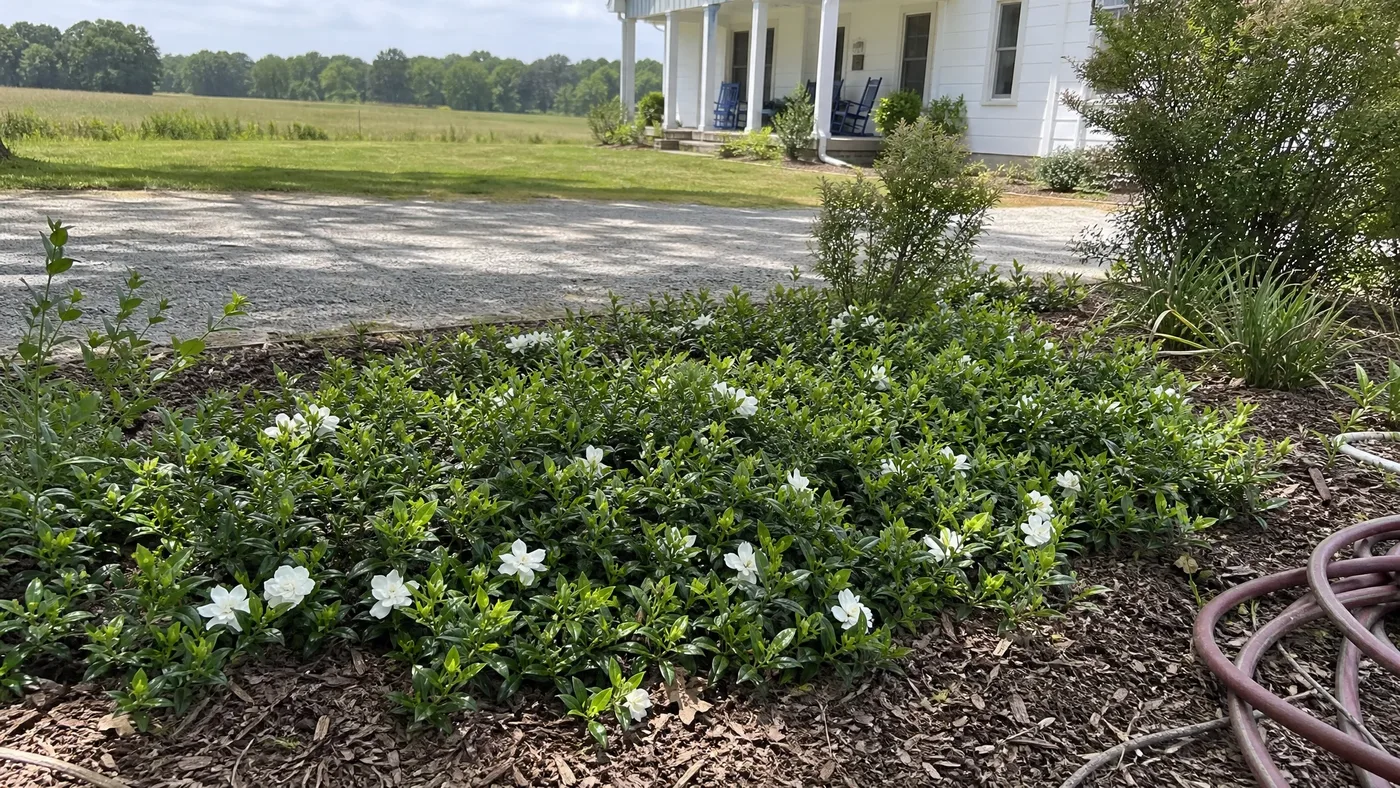
How Big Does Dwarf Gardenia Radicans Get?
Below, you'll find out all about how big this cultivar gets, but first the mistake that causes most of the trouble.
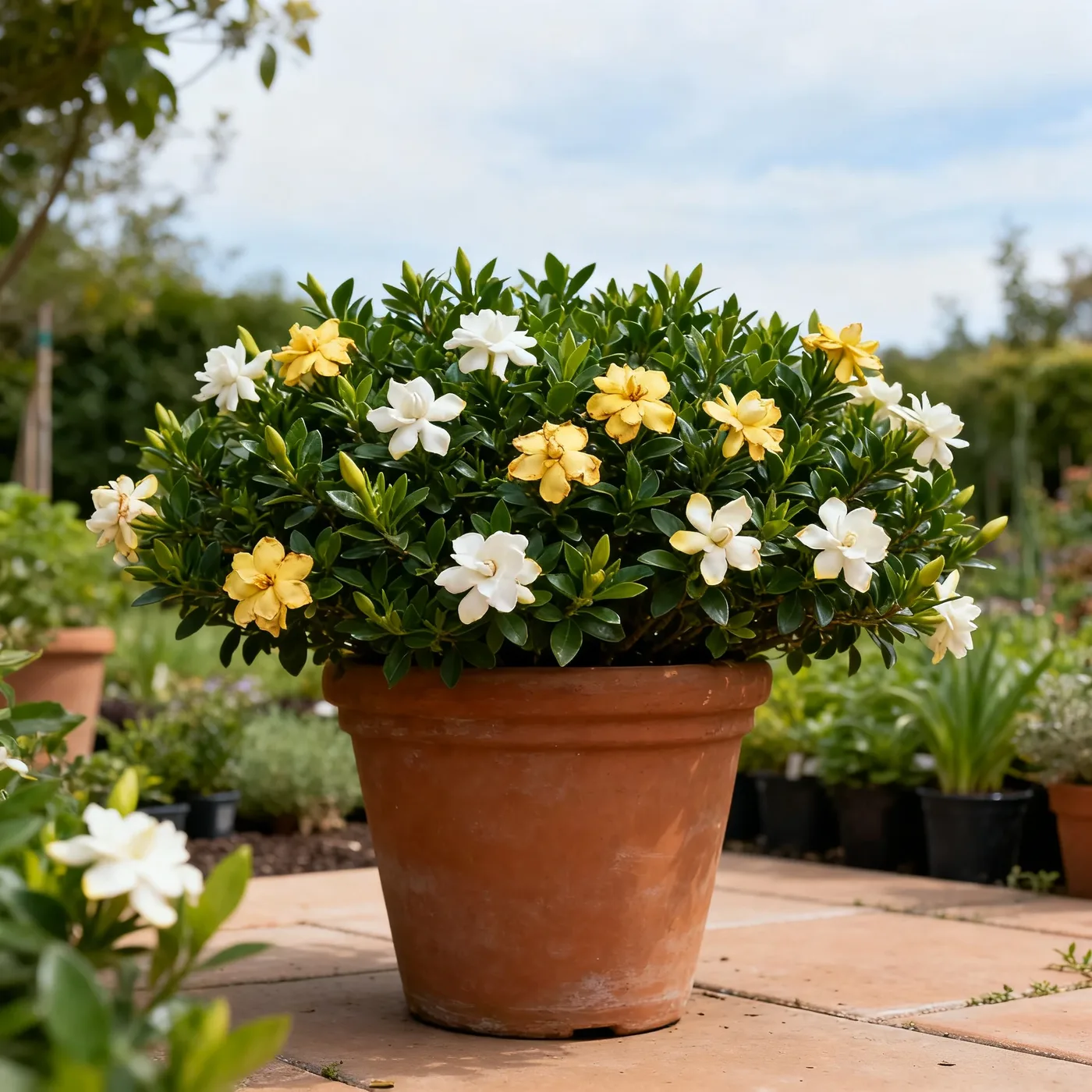
Plenty of people plant Dwarf Gardenia Radicans as if it were a regular gardenia, leaving four or five feet of bare mulch around each one. The plant never fills that space. It stays a low mat only 6 to 12 inches tall, and the gaps turn into weeds.
Others make the opposite mistake and crowd plants a foot apart, then wonder why the centers thin out and turn yellow. Both come from guessing the size instead of knowing it. Below, you'll find out all about how big Dwarf Gardenia Radicans gets, including its true height and spread, how fast it fills in, the spacing we use, and what size pot to choose.
Get the room right and you get a tidy, fragrant, evergreen edge. Get it wrong and you get gaps, or a crowded bed that struggles.
How Big Dwarf Gardenia Radicans Really Gets
Plan on a plant that grows to only 6 to 12 inches tall and spreads 2 to 3 feet. NC State lists it a little taller, up to 18 inches. It forms a dense, low mound of glossy dark green leaves and spreads sideways rather than up. The cream-edged variegated form stays the same size.
One of the most common questions we get is whether "gardenia" means a shrub. Not in this case. A standard Gardenia jasminoides runs 4 to 8 feet tall and wide, so Radicans is a fraction of that height and works as a groundcover, not a focal shrub. Among other compact gardenia cultivars, it stays the lowest.
You will still see older notes online that promise 1 to 2 feet tall and 3 to 4 feet wide. We don't plan around those numbers. The university figures are lower, and a bed sized for the bigger numbers stays bare for years.
Should I expect multiple stems from one plant?
Yes, Dwarf Gardenia Radicans naturally develops multiple stems branching from the base, creating a dense, bushy mound rather than a single-trunk shrub. This multi-stem branching pattern is part of what makes the cultivar so useful for groundcover and edging applications where you want visual fullness and cover.
Spacing Dwarf Gardenia Radicans in the Ground
Measure your bed first, then space by the real 2 to 3 foot spread. The answers below cover groundcover, borders and how many plants to buy. For the planting steps themselves, see our guide on how to plant Dwarf Gardenia Radicans.
How far apart should I space Dwarf Gardenia Radicans plants for groundcover?
Space plants 2-3 feet apart for mass planting or groundcover. Each plant can then reach its mature spread of 2-3 feet while you still get reasonably quick coverage. This spacing balances landscape impact against the plant's medium growth rate.
Can I plant closer together for faster coverage?
You can plant at 18-24 inches apart if you want denser, faster coverage that fills gaps sooner, though plants will eventually overlap and may compete for light, water, and nutrients. Tighter spacing also increases the risk of poor air circulation, which can invite whiteflies, scale, and other common pest problems that affect Gardenias.
What spacing works best for a formal border or edging?
For a neat, uniform border effect along a pathway or driveway, space plants 18-24 inches apart so they maintain distinct mounds without excessive merging and overlap. This spacing keeps individual plant forms visible while still creating a cohesive line and prevents the border from looking sparse in the first year or two.
How many plants do I need for a 10-foot length area?
Using the standard 2-3 feet spacing recommendation, you will need 4-5 plants for 10 linear feet of border or groundcover. At 2-foot spacing you would use 5 plants, while 3-foot spacing calls for 3-4 plants, with the gaps filling in naturally as plants spread over the next several years.
Growth Rate, Blooming and Lifespan
This cultivar fills in at a steady pace, so patience early on pays off. The questions below cover speed, first flowers, and how long a planting lasts.
How fast does Dwarf Gardenia Radicans grow?
Growth is medium, so don't expect a crawl or a sprint. A young plant needs a few seasons to fill its space, which matters if you expect quick landscape impact from a single pass of planting.
How long does it take to reach full mature size?
Plan on several seasons for a quart-sized nursery plant to reach its full 2-3 foot spread. Resist the urge to plant closer than 18 inches to speed things up. Crowded plants compete, and we see more yellowing in those beds than in properly spaced ones.
When will my nursery plant start blooming?
Many plants bloom in their first year from a nursery quart or gallon-sized container, rewarding you with fragrant white flowers that age to creamy yellow starting in late spring. You may see blooming activity even on young plants, though the first year of flowering can be sporadic as the plant diverts energy to root establishment.
How long do Dwarf Gardenia Radicans plants live?
This is a long-lived shrub that commonly survives 20 years or more with proper care and a suitable climate. Well-maintained plants in their hardiness zone show little sign of decline even after decades in the landscape, making them a worthwhile long-term investment.
Can I prune it to keep it smaller than its natural size?
Yes, light shaping right after spring and summer bloom will encourage a denser form and keep plants within a tighter footprint if needed. Avoid pruning in late summer or fall, since the plant sets next year's flower buds by late summer, and pruning then removes flowering wood and reduces next season's blooms.
What happens if I never prune the plant?
Unpruned, the plant still mounds and spreads to its full 2-3 foot width. Over many years it can turn leggy or develop thin spots in the center, especially in deep shade, so occasional light shaping keeps it healthy.
Light, Soil and Water That Set the Size
Conditions decide whether Dwarf Gardenia Radicans reaches its full spread or stalls well short of it. Check these first when a plant looks stunted or yellow.
Does soil quality affect the mature size?
Plant in rich, moist, well-drained soil. Gardenias prefer acid soil with a pH of less than 6.0. When the pH creeps up, new leaves turn yellow while the veins stay green, and growth stalls. Test the soil before you plant. Poor drainage is the other killer, since it leads to root rot.
How does sun exposure affect the plant's growth and spread?
Dwarf Gardenia Radicans grows best with part sun to part shade, with morning sun and afternoon shade ideal in hot climates. Full shade will slow growth significantly and can result in a thinner, less dense plant with reduced flowering, while excessive afternoon sun in very hot zones may scorch foliage.
You will see advice to plant it in full sun for more flowers. We don't follow that. Afternoon sun scorches the foliage in hot climates, and a scorched plant spends its season repairing leaves instead of spreading.
Will consistent watering help it reach full size faster?
Yes, medium, consistent moisture while the plant is establishing encourages faster root development and lateral spread into the surrounding space. Once established, the plant has low to moderate drought tolerance and still grows best with regular moisture, so consistent watering in the first 2-3 years supports reaching full maturity sooner.
Should I fertilize to encourage larger size?
Feed with an acid-loving plant fertilizer such as an azalea or camellia type in early spring and again after the first bloom flush in summer. Feeding supports vigorous growth and flowering, but it won't push the plant past its natural 2-3 foot spread.
For detailed care instructions including specific sun, water, soil pH, and pruning guidance, see our Dwarf Gardenia Radicans care guide. If you have questions specific to your local growing conditions or hardiness zone edge, check with your local extension service for regional recommendations.
Hardiness and Cold Limits for Dwarf Gardenia Radicans
Cold is the other thing that holds this cultivar back, and it is less hardy than the species. Here is what to expect and how to protect plants near the edge of their range.
NC State lists the cultivar for zones 7b to 8b, and dwarf forms tend to be more cold sensitive than standard gardenias. Treat zone 8 as the dependable minimum. In zone 7b, choose a sheltered spot and mulch well. Our guide to what zones Dwarf Gardenia Radicans grows in covers the details.
Will it survive outdoors year-round in zone 8?
Yes, Dwarf Gardenia Radicans survives zone 8 winters, though providing shelter from harsh winds and applying 2-3 inches of mulch around the base during severe cold snaps improves survival odds. Choose a protected location if possible, such as a south-facing wall or spot sheltered from wind.
A hard freeze that burns the leaves costs you a season of spreading, because the plant rebuilds foliage first. Cold damage, more than any feeding mistake, is why some plants stay smaller than their neighbors.
Growing Dwarf Gardenia Radicans in Containers
A pot is a good fit for a plant this low, and the pot size sets how large it gets. Match the container to the result you want.
How big of a container does Dwarf Gardenia Radicans need?
Start with a quart or 1-gallon pot for a young nursery plant, then move up to a 3-5 gallon container as the plant matures to provide adequate root room and soil volume for consistent moisture and nutrient availability. A mature containerized plant performs best in a 5-gallon or larger pot.
Will pot size limit how big the plant gets?
A pot under 2 gallons restricts the roots and keeps the plant tighter than one in the ground. Because this cultivar spreads only 2-3 feet, a container of 5 gallons or more gives it room to reach full size, or you can plant it in the ground.
Can I keep this plant in a container permanently?
Yes, Dwarf Gardenia Radicans performs well in containers with acidic potting mix and excellent drainage, making it a good choice for patios and decks. Container plants need more frequent watering and feeding than in-ground plants, and you may need to refresh the top 2-3 inches of soil annually. Our guide to growing Dwarf Gardenia Radicans in containers and pots goes further.
Quick Reference Table
Use this table as a quick check when you plan a bed.
| Characteristic | Value |
|---|---|
| Mature Height | 6-12 inches (up to 18 inches per NC State) |
| Mature Spread | 2-3 feet |
| Growth Rate | Medium |
| Time to Full Spread | Several seasons from a quart-sized plant |
| Spacing for Groundcover | 2-3 feet apart |
| Spacing for Edging | 18-24 inches apart |
| USDA Hardiness Zones | 7b-8b |
| Soil pH | Acid, below 6.0 |
| Container Size (Mature Plant) | 5+ gallons |
| Plant Type | Evergreen spreading groundcover shrub |
| First Bloom | Often in first year from nursery plant |
| Bloom Time | Main flush May-June, sporadic through summer |
| Lifespan | Long-lived with proper care |
| Foliage | Small, glossy, dark green (evergreen) |
Giving Dwarf Gardenia Radicans the Room It Needs
Size your Dwarf Gardenia Radicans for what it is, a 6 to 12 inch mound that spreads 2 to 3 feet. Space plants 2 to 3 feet apart for cover or 18 to 24 inches for a neat edge, and give them acid, moist, well-drained soil with morning sun and afternoon shade.
Watch the leaves. Yellowing new growth usually points to soil pH or drainage long before it points to size, so fix those first. Prune lightly right after the main bloom, and protect plants in zone 7b and 8 from hard freezes.
Dwarf Gardenia Radicans
Nursery-grown Dwarf Gardenia Radicans in sizes from 1 Gallon, shipped to your door.
From $36.97
Shop Now →Customers come back to us for low, tidy mounds that stay the size we promised, grown by us in moist, acidic, well-drained beds with morning sun and afternoon shade. As a small grower-run business, we only ship top-quality plants we would plant ourselves. Come see the plants we have ready.