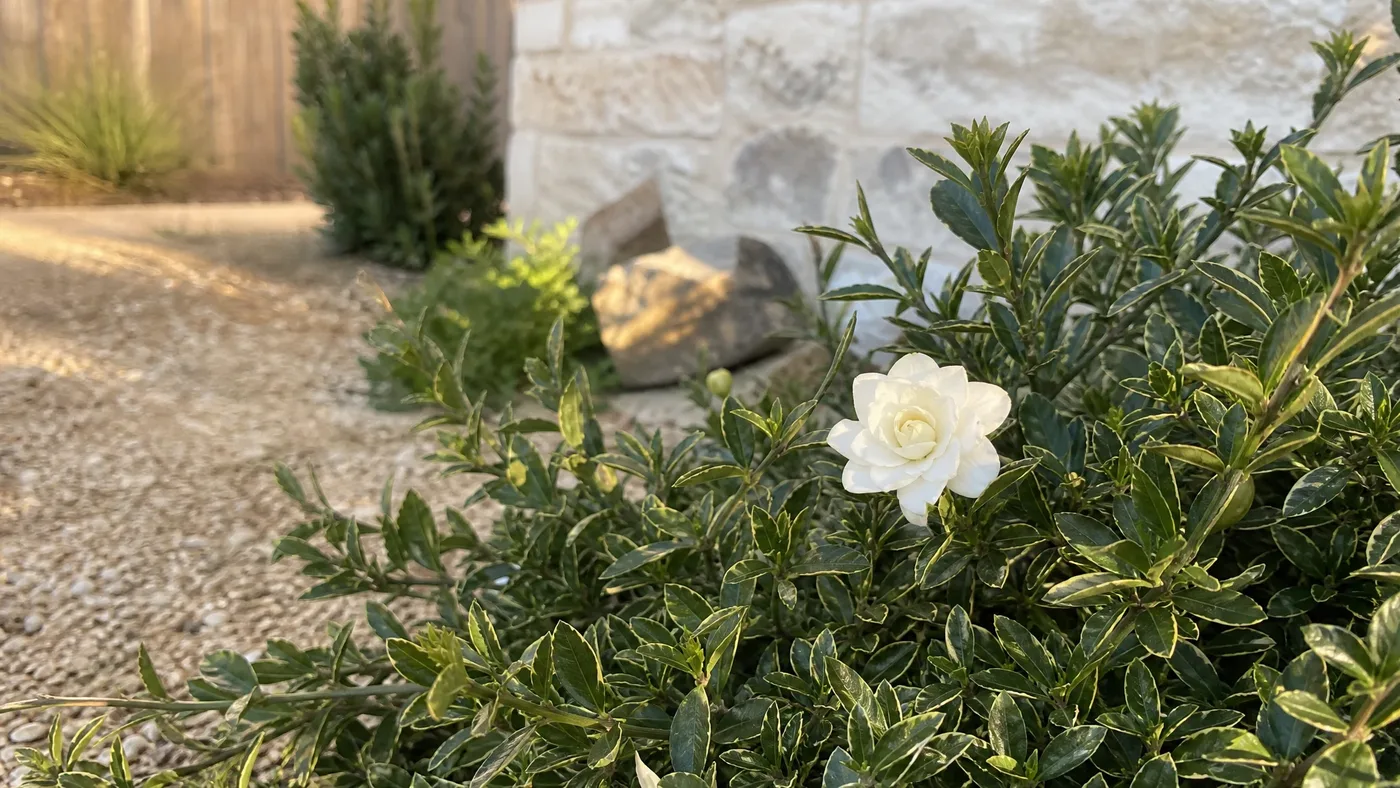
Variegated Dwarf Gardenia Radicans: What Sets It Apart
A sport, in a gardener's vocabulary, is a branch that mutates. One shoot on an otherwise ordinary plant grows differently from the rest. If that difference holds when you root a cutting from it, growers have a new form to propagate and name.
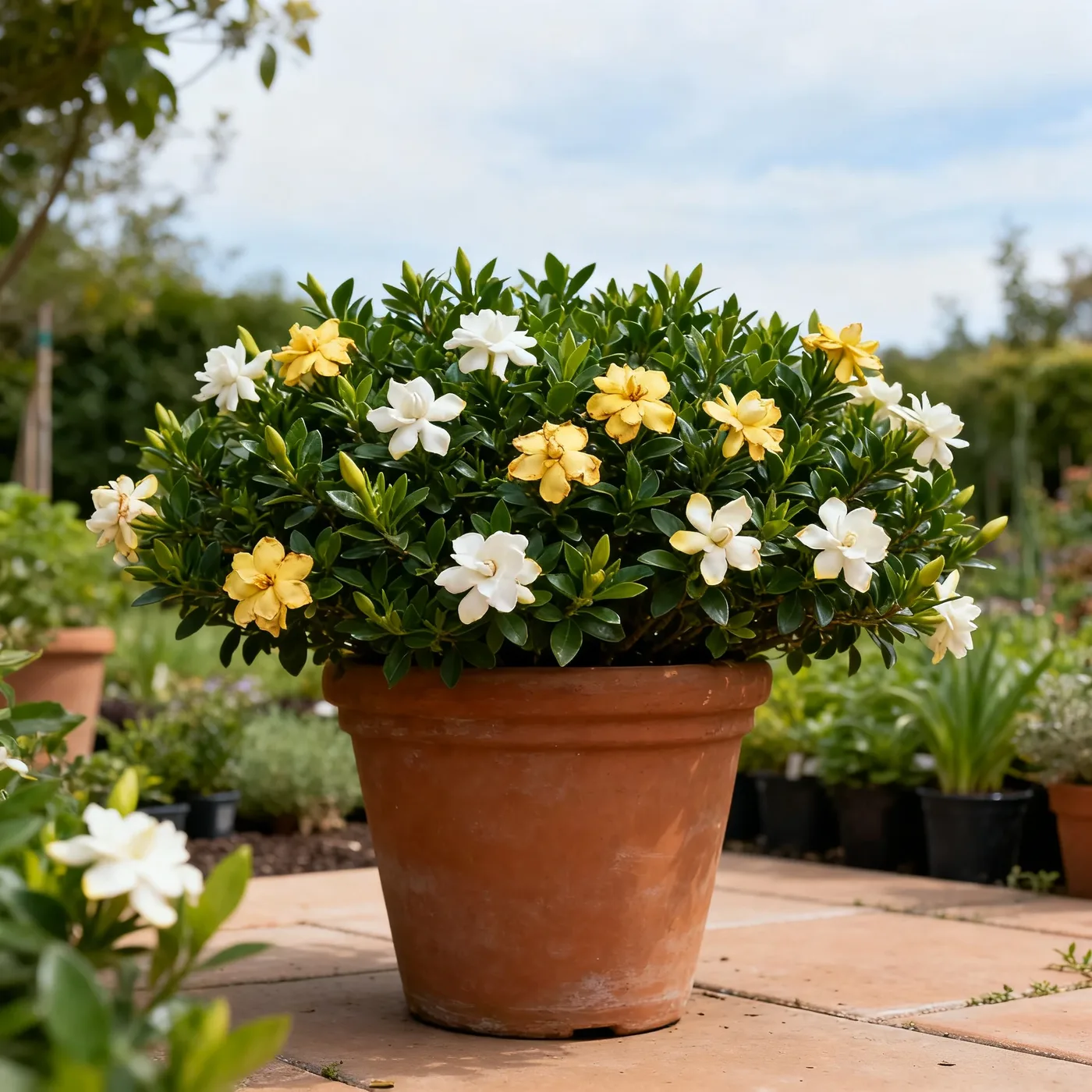
Most people expect a variegated plant to be fussier than its green parent, or at least a bigger project. The cream-edged Dwarf Gardenia Radicans is neither. It is the same low, spreading shrub with white, scented summer flowers, wearing a pale margin on each leaf. What changes is its vigor, how its leaves handle strong sun, and where it looks best.
We'll walk you through what the cream edge is and why it forms, then how the two forms compare on strength, how to tell sun scorch from true pattern, and what stays identical, and finally where each one earns a spot in your garden.
Reading the Word Sport Before Anything Else
Start with the word itself, because everything below leans on it. A sport is a shoot that carries a change the rest of the plant does not. The change begins in the cells of one growing tip, and every leaf that grows from that tip carries it.
Most sports are unremarkable. Now and then one is attractive and stays steady when you root a cutting from it, and growers then propagate it as its own named form. The cream-edged Dwarf Gardenia Radicans is one of these, sold in the trade as 'Radicans Variegata'.
What Variegation Means
Variegation is pigment missing in a pattern. A normal leaf is green because its cells carry chlorophyll, the pigment that captures light. In a variegated leaf, a band of cells has little or none, so that band shows up pale. On this plant the band runs around the margin.
Keep that picture in mind: a green leaf with a strip around its rim that cannot do the green part's work. Every contrast that follows, from vigor to sun scorch, comes back to that strip.
Reading the Plant Tag
Names get tangled here, so read tags carefully. Shoppers search for this plant as variegata, variegated radicans or cream-edged, and all of those point to the same thing: the pale-margined sport. A tag that says only 'Radicans' means the plain green form.
Florida's extension service also notes that some nurseries and catalogs sell 'Prostrata' under the name 'Radicans'. If the leaf has no cream margin, you have a green plant whatever the label says, and the margin is the one reliable test.
Cream Edges on Variegated Dwarf Gardenia Radicans Leaves
The extension description is short and accurate: oval blue-green leaves edged with creamy white. Notice that the base color is blue-green, a touch cooler than the deep, glossy green most people picture on a gardenia. The cream sits only at the margin, and the center of each leaf stays green.
How to Read the Margin
On a healthy plant the cream band follows the leaf outline cleanly, with a fairly crisp line between cream and green. Its width varies from leaf to leaf, so judge the plant as a whole rather than one leaf. A band that is present on the newest leaves as they unfold is true variegation.
Against the Solid Green Leaf
The standard form has solid green leaves and no margin to read. Across a bed, the green plant looks like a dark, even mass. The cream-edged plant looks lighter and a little busier, especially in shade.
The flowers do not change. They are white to cream and age to yellow on both forms, so on the variegated plant the leaf edge echoes the bloom color. Against solid green, the white flowers stand out like lights on a dark background. Against cream edges, leaves and blooms blend into one soft effect. Neither is wrong, but they read differently.
Why Plain Green Dwarf Gardenia Radicans Grows Stronger
Plants make their food with chlorophyll. Think of each leaf as a solar panel. The green area collects the light, and the cream strip is a row of panels with the cells left out. It still sits in the sun, but it adds little or nothing to the energy budget. A green plant has more working leaf area for the same number of leaves, and that is the whole reason it grows stronger.
What the Gap Looks Like
Radicans has a medium growth rate, and the cream-edged form runs a little behind that. In our rows, the variegated plants fill in more slowly than green neighbors set out the same day. The gap is modest, not dramatic.
Mature size does not change. The plant stays 6 to 12 inches tall with a spread of 2 to 3 feet, and our guide to how big Dwarf Gardenia Radicans gets applies to both leaf forms. The variegated plant takes longer to get there.
That slower pace has a practical side. A cream-edged plant has less in reserve, so it recovers more slowly from a hard prune, a cold snap or a dry spell. Treat it gently in its first season, and do not judge it against a green plant planted beside it.
Cut Out Reverting Shoots
A sport can slip back. Now and then a variegated plant sends up a shoot with plain green leaves, because the original, unchanged tissue is still in there. That shoot has the stronger engine, so it outgrows the cream-edged growth around it and slowly takes over.
Trace any all-green shoot back to its base and cut it out, ideally during your regular pruning after the plant finishes flowering in summer. Do it early. A reverted shoot left for several seasons can leave one side of the plant plain green and the other side thin.
Sun Scorch and Natural Pattern Look Different
One of the most common questions we get is whether brown edges on a cream-edged leaf are a disease. Usually they are sunburn. The pale margin has little pigment to work with, so it is often the first part of the leaf to show damage in hard afternoon light.
Gardenias want full morning sun but protection from the hot afternoon rays, and our guide to Dwarf Gardenia Radicans sun requirements covers the details.
Four Ways to Tell Them Apart
Check these in order before you move or treat anything.
- Color. Pattern stays cream to ivory, and the tissue stays supple. Scorch turns tan to brown and feels dry and crisp.
- Position. Pattern appears on every leaf, including shaded ones deep in the plant. Scorch concentrates on leaves facing the afternoon sun.
- Timing. Pattern is there when the leaf unfurls and does not change. Scorch shows up days after a hot, bright spell.
- Edge shape. Pattern follows the outline evenly. Scorch is ragged and creeps inward from tips and margins.
What to Do After Scorch
A scorched leaf will not turn cream again, so do not wait for it to recover. If only a few leaves are marked, leave them until the plant finishes flowering, then trim them out.
The real fix is to the site: give the plant morning sun with shade from midday on, or move it a few feet so a building or taller shrub blocks the afternoon sun. New leaves should unfold with clean margins.
Do Not Mistake It for Yellowing
A third look-alike is iron chlorosis. Iron becomes unavailable when soil pH is above 7.0, and chlorosis primarily affects young foliage. A chlorotic leaf is yellow across the blade rather than neatly rimmed in cream, and the new growth shows it first.
If you see that, the answer is in the soil, not the sun. Our guide on yellowing leaves and missing blooms walks through the fix.
What Dwarf Gardenia Radicans Keeps in Either Leaf
Here is what does not change when the leaf margin does. The sport altered the pigment in the leaf, not the root system, the flowers or the cold tolerance. The table below sets the two forms side by side.
| Trait | Solid green leaf | Cream-edged leaf |
|---|---|---|
| Mature size | 6 to 12 inches tall, 2 to 3 feet wide | The same |
| Light | Morning sun, afternoon shade | The same, with extra care against afternoon scorch |
| Soil | Acid, pH below 6.0 | The same |
| Flowers | White to cream, aging to yellow | The same |
| Hardiness | Zones 7b–8b, not frost tolerant | The same |
| Vigor | Medium | Slightly slower |
Bloom and Scent
Radicans flowers are double, waxy, very fragrant, and about 1 to 2 inches across. That is smaller than the species' flowers. They open mainly in May and June, with sporadic blooms through summer. A cream edge on the leaf gives you no more and no fewer flowers, and no weaker perfume.
Care Needs
You do not need to give the variegated plant special feeding or a special spot. Acid, well-drained, moist soil suits it exactly as it suits the green form. Cold is the same limit too. NC State lists this cultivar for zones 7b to 8b and calls it not frost tolerant, so a hard freeze hurts either leaf.
Shared Pests and Problems
The pale margin does not make the plant more or less attractive to pests. Whitefly is the most common problem on gardenias, and its sticky honeydew feeds sooty mold on the leaves. Root rot shows up mainly in poorly drained soil. Both forms need the same watching, though sooty mold and pest damage are easier to spot against a cream margin.
Where a Pale-Edged Dwarf Gardenia Radicans Earns Its Place
Since the two forms care the same, the choice is about design. Our position is simple: buy the green form to cover ground, and buy the cream-edged form for a spot people will look at. The variegated plant does fill in, but slowly. In a mass planting that means a longer wait and uneven gaps while the cream-edged plants catch up.
Accent and Specimen
A lone variegated plant works because nothing competes with it. Set it beside an entry path, at the corner of a bed, or in a shaded spot that needs brightening, and the cream margins catch the light. A container does the same job on a patio, where you can see the leaf edge up close and smell the flowers.
Mass Planting and Drifts
A drift of one form reads as a groundcover. A drift of green with a few cream-edged plants set in it reads as a design, because the pale plants punctuate the dark ones. Keep the variegated plants few. Many scattered evenly turn the bed busy and make any scorched leaf stand out.
We grow both forms and label them separately, so the leaf you choose is the leaf you plant. For layouts, our landscape ideas for Dwarf Gardenia Radicans show both forms in use.
Variegated Dwarf Gardenia Radicans as the Accent Plant
The cream-edged plant is worth its slower growth when you want one thing to catch the eye. It has the same size, the same scented white flowers and the same needs as the green form. You trade a little vigor and some extra care against afternoon scorch for a leaf that lights up its corner of the garden.
To choose at the nursery bench, look at the leaf margin first. A clean cream rim on every leaf, including the newest, means true variegation. A plain green leaf means the standard form, and a tan, crisp edge means the plant has been scorched.
Dwarf Gardenia Radicans
Nursery-grown Dwarf Gardenia Radicans in sizes from 1 Gallon, shipped to your door.
From $36.97
Shop Now →Our Dwarf Gardenia Radicans is raised on our own farms in moist, acidic ground that drains freely, with light in the morning and a break from the heat after lunch, and each plant is boxed with care so the stems stay whole and the cream margins arrive unmarked. We are a small team of growers who put top-quality plants in every box. If the variegated form has caught your eye, we would be glad for you to pick out one for your own garden.